12 Signs You Need to Remove a Tree Before It Becomes a Hazard
Trees are vital for maintaining healthy landscapes, improving air quality, and providing shade, but they can also become dangerous over time. Whether due to disease, age, or storm damage, a weak or dying tree can cause severe property damage or injury. Knowing when to remove a tree is essential for keeping your home and yard safe.
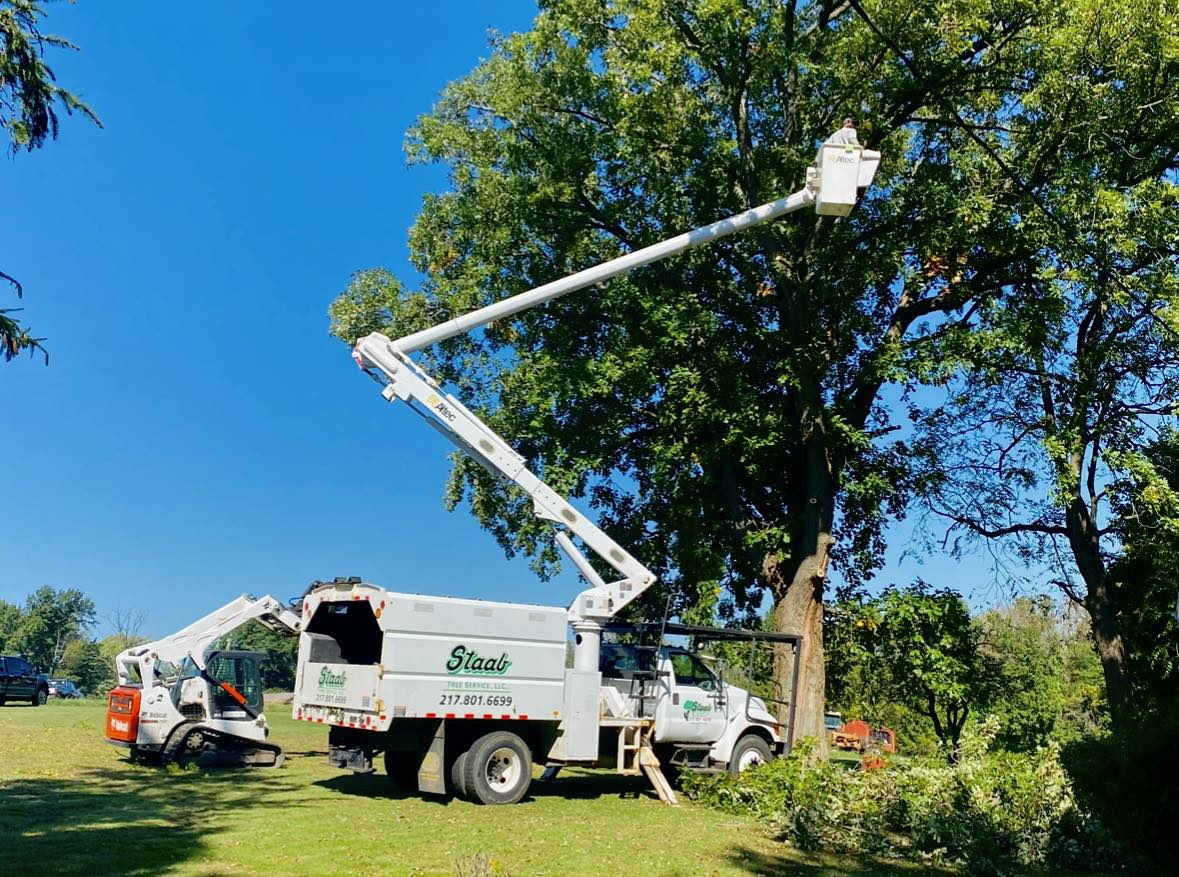
At Staab Tree Service, we specialize in identifying and safely removing problem trees before they cause harm. Our licensed and insured professionals serve Menard, Sangamon, Cass, Mason, and Logan Counties, helping homeowners and businesses protect their properties through expert tree assessment and removal services.
12 Signs You Need to Remove a Tree Before It Becomes a Hazard
Trees often show visible warning signs before they become unsafe, and recognizing them early can save you from serious problems.
The tree leans significantly or has shifted position recently.
The trunk has deep cracks, cavities, or visible decay.
Large dead branches hang over structures or power lines.
The roots are exposed, damaged, or showing signs of rot.
Mushrooms or fungal growth appear around the base.
Bark is peeling off, revealing soft or discolored wood underneath.
The tree’s canopy appears thin, patchy, or bare in several areas.
Insects such as carpenter ants or borers are infesting the trunk.
The tree suffered extensive storm or lightning damage.
Nearby soil is cracked, raised, or shifting around the base.
The tree no longer produces healthy leaves or buds.
The tree sways excessively during mild winds, indicating internal weakness.
Spotting these symptoms early allows you to remove a tree safely before it endangers people, structures, or neighboring vegetation.
1. The Tree Leans Significantly or Has Shifted Position Recently
A sudden or worsening lean typically means the tree’s roots are no longer providing stable support. Unstable soil or partial uprooting can make the tree more likely to fall without warning, especially during storms. When the tilt becomes noticeable or starts increasing, removal may be the safest choice.
A professional evaluation can determine whether the lean is due to natural growth patterns or structural failure. If roots have separated from the ground or the soil is cracking on one side, it’s best to remove the tree before it collapses unexpectedly.

2. The Trunk Has Deep Cracks, Cavities, or Visible Decay
Deep splits, hollows, or missing bark reveal structural weakness that compromises a tree’s strength. Even if it still appears green and leafy, a hollow or cracked trunk may not withstand high winds. These defects often indicate advanced decay that cannot be reversed.
When the main trunk becomes unstable, the tree can fail suddenly and cause significant property damage. Removing the tree eliminates the hazard and prevents nearby trees from being affected by decay or disease.
3. Large Dead Branches Hang Over Structures or Power Lines
Dead or dying branches can break off at any time, especially during storms. Overhanging limbs above houses, driveways, or utility lines pose immediate safety risks. When major branches start dying, the entire tree may already be in decline.
While pruning may temporarily improve safety, repeated dieback suggests deeper issues like disease or internal decay. Removing the tree entirely ensures long-term protection from falling debris.
4. The Roots Are Exposed, Damaged, or Showing Signs of Rot
Roots are vital for stability and nutrient absorption, but they are often the first part of a tree to fail. Exposure, fungal decay, or construction damage can weaken them beyond recovery. Once roots deteriorate, the tree can tilt or collapse under its own weight.
Signs like loose soil, leaning, or mushrooms near the roots indicate internal decay. Tree removal at this stage prevents dangerous uprooting and stops further soil disruption.
5. Mushrooms or Fungal Growth Appear Around the Base
Mushrooms or fungal conks growing on or around a tree base usually signal internal rot. These fungi feed on decaying wood, meaning the inside of the trunk is likely decomposing. The longer they persist, the weaker the structure becomes.
Removing a tree showing fungal infection helps protect nearby trees from contamination. It also prevents an unpredictable collapse that could occur as the decay spreads upward through the trunk.
6. Bark Is Peeling Off, Revealing Soft or Discolored Wood Underneath
Peeling or missing bark exposes the tree’s inner layers, leaving it vulnerable to disease and moisture damage. Discoloration beneath the bark often points to internal rot or insect activity. As the decay progresses, the trunk loses strength and can fail.
Trees with large sections of missing bark rarely recover, making removal the best long-term solution. Once decay sets in, the damage cannot be reversed through trimming or treatment.
7. The Tree’s Canopy Appears Thin, Patchy, or Bare in Several Areas
A sparse or uneven canopy indicates that the tree is under stress, possibly from root damage, nutrient deficiency, or disease. When large portions of leaves fail to grow, the tree is no longer photosynthesizing efficiently. This usually means decline has advanced beyond recovery.
Removing the tree before complete dieback occurs can protect the rest of your landscape. A thinning canopy is often one of the earliest visible signs that removal will soon be necessary.

8. Insects Such as Carpenter Ants or Borers Are Infesting the Trunk
Insects target weakened trees, burrowing into the wood and accelerating internal decay. Carpenter ants, bark beetles, and borers feed on soft, decomposing tissue, further compromising the trunk’s strength. Infested trees can become brittle and unsafe over time.
Once a pest infestation reaches the core, treatment is usually ineffective. Removing the affected tree helps prevent insects from spreading to healthy ones nearby.
9. The Tree Suffered Extensive Storm or Lightning Damage
Lightning or high winds can split trunks, break branches, or tear roots out of the soil. Even when a damaged tree remains standing, it may have internal fractures that are invisible from the outside. These hidden weaknesses often lead to collapse later on.
If a tree has lost major limbs or developed a split trunk, removal is the safest option. Storm-damaged trees are unpredictable and should never be ignored after severe weather.
10. Nearby Soil Is Cracked, Raised, or Shifting Around the Base
Soil movement around the base indicates that roots are loosening or lifting from the ground. Cracked or raised soil often appears when a tree starts leaning or after strong winds. These changes show that the root system is no longer securely anchored.
Once the soil begins shifting, the tree can fall with little warning. Removing it promptly prevents potential damage to nearby structures, fences, or landscapes.
11. The Tree No Longer Produces Healthy Leaves or Buds
When a tree stops producing leaves or buds during the growing season, it is likely dying internally. Nutrient flow is disrupted, leading to thinning foliage or complete defoliation. A tree in this state rarely recovers, even with treatment.
Dead trees quickly become brittle and hazardous. Removing them before complete failure prevents broken limbs, falling debris, and further pest infestations.

12. The Tree Sways Excessively During Mild Winds, Indicating Internal Weakness
If a tree moves excessively during light breezes, it may have internal decay or root instability. The motion puts stress on weakened areas, which can cause sudden snapping or collapse. Such trees are especially dangerous near homes and walkways.
A professional inspection can determine whether internal rot or root damage is responsible. When instability is confirmed, removal is the safest way to protect surrounding areas.
Schedule Your Professional Tree Removal Today
Recognizing warning signs early can prevent costly damage and protect your family from potential danger. Trees that lean, decay, or lose stability should be inspected by professionals before they fail completely. A timely decision to remove a tree ensures safety and preserves your property’s value.
Staab Tree Service proudly provides expert tree removal, trimming, pruning, stump grinding, and storm cleanup services throughout Central Illinois. Our licensed team is ready to handle any situation safely and efficiently. Contact us today to schedule an inspection and keep your property secure, beautiful, and hazard-free.